You might feel fine throughout much of the day, only to notice a stuffy nose, sneezing, or coughing once you settle into bed. If this happens regularly, allergens in your bedroom or changes in how your body responds when you lie down may be contributing to your symptoms.
Nighttime allergy symptoms often involve indoor allergens such as dust mites, pet dander, and mold. These allergens can collect in bedding, carpeting, and furniture, increasing your exposure while you sleep. Lying down can also make existing nasal congestion and postnasal drip more noticeable.
Understanding what may be triggering your symptoms is an important step toward getting more comfortable at night and knowing when professional allergy care may help.
Bedroom Allergens That Can Trigger Symptoms
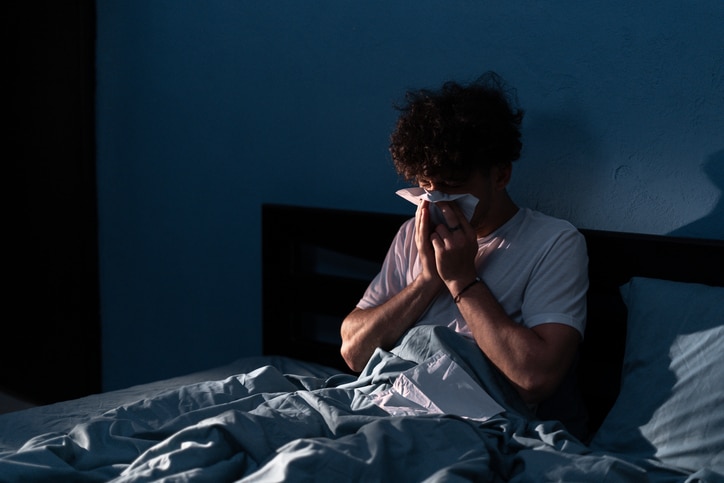
Your bedroom may look clean, but allergens can still collect on surfaces and in fabrics throughout the room. Mattresses, pillows, carpeting, curtains, and upholstered furniture can hold particles that may trigger allergy symptoms.
Common bedroom allergens include dust mites, pet dander, mold spores, and pollen that enters through open windows or is carried indoors on clothing and hair.
Dust mites are microscopic organisms that are commonly found in household dust, particularly in bedding and upholstered materials. People with dust mite allergies react to the proteins found in dust mite waste and body fragments.
Pet dander is another possible trigger. Even if your pet does not sleep in your bed, allergens from its skin, saliva, and other secretions can collect on furniture, clothing, and bedding. These particles may remain in a room after the pet leaves.
Mold can also contribute to nighttime symptoms, especially in rooms with moisture problems, condensation, or poor humidity control. Mold spores may become airborne and trigger symptoms in people who are sensitive to them.
Outdoor pollen can also enter the bedroom on clothing, hair, and pets, potentially adding to nighttime exposure during seasonal allergy periods.
If you suspect your home environment is contributing to your symptoms, Allergy & Clinical Immunology offers additional information about allergy-proofing your home and reducing common indoor allergens.
How Sleeping Position Can Make Congestion Worse
Indoor allergens are not the only reason symptoms may become more noticeable at night. Your sleeping position can also affect how congestion and mucus drainage feel.
When you are upright during the day, gravity helps mucus drain through your nasal passages and throat. Lying flat changes that drainage pattern, which may make a stuffy nose or postnasal drip more noticeable.
Postnasal drip occurs when mucus collects or drains down the back of the throat. It can cause throat irritation, frequent swallowing, or coughing, especially when you are trying to fall asleep.
Allergic inflammation can also cause swelling inside the nose, making it harder to breathe comfortably through your nasal passages.
For some people, nighttime congestion may lead to mouth breathing, a dry throat, or repeated waking during the night. Others may notice that coughing begins shortly after lying down.
Sleeping with your head slightly elevated can help to reduce discomfort from congestion or postnasal drip. However, this does not address an underlying allergy or another medical condition that may be contributing to the symptoms.
Allergies do not always cause nighttime congestion. Respiratory infections, sinus conditions, and acid reflux can cause similar problems. If symptoms continue, identifying the cause is more useful than assuming every stuffy nose is an allergic reaction.
Why Dust Mites Are a Common Nighttime Trigger
Dust mites are a common indoor allergen because they live where people spend a lot of time, including mattresses, pillows, bedding, and upholstered furniture.
These microscopic organisms thrive best in warm, humid environments and feed on skin cells that people naturally shed. Mattresses and bedding can provide favorable conditions for them to survive.
For someone with a dust mite allergy, exposure to dust mite allergens can trigger sneezing, nasal congestion, a runny nose, itchy eyes, and other respiratory symptoms.
Because most people spend several hours in bed each night, contact with allergens in the sleeping environment may contribute to symptoms that develop or continue overnight.
Dust mites don’t need to bite or directly touch the skin to trigger an allergic reaction. The allergic response occurs when a sensitive person is exposed to dust mite allergens, which can be present in settled dust and disturbed particles.
Unlike some seasonal pollen allergies, dust mite allergies can cause symptoms year-round. If you experience congestion or sneezing most nights, regardless of the season, it may be worth discussing indoor allergens with an allergy specialist.
You can’t eliminate every dust mite from a home, but reducing bedroom exposure may help manage symptoms.
Simple Ways to Reduce Nighttime Allergy Exposure
If bedroom allergens contribute to your symptoms, small changes to your sleeping environment may reduce exposure. The most useful approach depends on which allergens you are sensitive to, but several habits can make the bedroom easier to maintain.
Wash bedding regularly. Wash sheets, pillowcases, and other washable bedding weekly. When permitted by the fabric’s care instructions, hot water can help kill dust mites. Use appropriate washing and drying methods for items that cannot tolerate high temperatures.
Use dust mite-resistant mattress and pillow covers. Zippered allergen-proof encasements create a barrier between you and dust mite allergens that may be present inside mattresses and pillows.
Keep pets out of the bedroom. If you are allergic to your pet, limiting its access to your sleeping area can help reduce exposure to pet allergens. Remember that dander can also travel on clothing and other household materials.
Reduce dust buildup. Vacuum rugs and carpets using a HEPA-filter vacuum, and use a damp cloth to clean all hard surfaces. Regular cleaning helps limit dust and allergen buildup. When possible, avoid cleaning the bedroom immediately before bedtime, since vacuuming and dusting can temporarily stir particles into the air.
Control indoor humidity. Dust mites and mold grow more readily in humid environments. Keeping indoor relative humidity below 50% can help make the environment less favorable for these allergens. Address leaks or other moisture problems promptly.
Limit pollen brought indoors. During high pollen periods, showering and changing clothes before bed can help remove allergens that have collected on your hair and skin. Keeping bedroom windows closed when pollen levels are elevated may also reduce exposure.
These steps can reduce contact with common allergens, although they may not resolve every case of nighttime congestion or coughing.
For additional cleaning and maintenance guidance, read these spring cleaning tips to reduce indoor allergens. Many of these strategies are useful year-round, not just in spring.
When to See an Allergy Doctor
An occasional stuffy nose at bedtime does not necessarily mean you have an allergy. However, symptoms that occur regularly, interrupt sleep, or continue despite changes to your bedroom environment deserve closer attention.
Consider scheduling an evaluation with an allergy specialist if you experience:
- Nighttime congestion or sneezing several nights a week
- Frequent coughing or throat irritation that interrupts sleep
- Symptoms that continue throughout the year
- Persistent symptoms despite reasonable efforts to reduce allergen exposure
- Recurring symptoms that affect your energy or daily activities
- Wheezing, chest tightness, or other possible asthma symptoms
An allergy doctor can review your symptoms, medical history, and environmental exposures to help determine whether allergies may be contributing to your sleep difficulties.
Depending on your medical history, skin testing or blood testing may help identify sensitivities to dust mites, pet allergens, mold, pollen, or other substances. We interpret test results alongside your symptoms because a positive test does not always mean that allergen is causing your current problems.
Allergy treatment may include environmental changes, medications such as antihistamines or nasal corticosteroid sprays, and other options based on your diagnosis. For certain confirmed allergies, an allergist may recommend discussing allergen immunotherapy.
If you are searching for an allergy doctor in Pittsburgh because nighttime symptoms are affecting your sleep, a professional evaluation can help identify what’s causing the problem and which treatments may be appropriate.
New or worsening breathing difficulty requires prompt medical attention, not waiting for a routine allergy appointment.
Find Help for Nighttime Allergies in Pittsburgh
Allergy symptoms that interrupt your sleep can leave you feeling tired and uncomfortable the following day. Whether the symptoms are caused by dust mites, pet dander, mold, or another trigger, understanding the cause is an important part of choosing the right care.
At Allergy & Clinical Immunology, patients in the Pittsburgh area can receive allergy evaluations, appropriate testing, and individualized treatment recommendations based on their symptoms and medical history.
If nighttime congestion, coughing, or other allergy symptoms regularly interfere with your sleep, contact Allergy & Clinical Immunology to schedule an evaluation and discuss your allergy treatment options.